.svg)
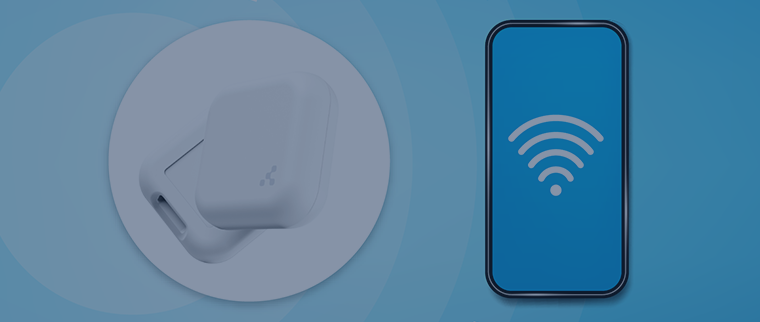
New to proximity technologies? This guide provides a comprehensive overview of beacon technology along with information to help you understand how they can deliver benefits to your cleaning or security business and customers. Beacon technology provides real-time tracking of officers and provides proof of service to cleaning contractors' customers.
In this eBook, we walk through the different ways service contractors can supercharge their workforce with proximity technology. Cleaning and security contractors need complete visibility of their distributed workforces. Beacons are one of the available solutions that can give security contractors real-time tracking of officers, and provide cleaning contractors with proof of service to customers.
What are Beacons?
Beacons are small wireless devices that broadcast signals using Bluetooth Low Energy (BLE) technology. Mobile apps on compatible devices listen for signals from beacons placed in the physical world and then trigger an experience via the app. Experiences include sending a notification, coupon, video, form, URL or other form of media relevant to a person’s exact location.
Beacon-enabled apps are notified when the device enters or exits the range of a beacon and also monitor the distance from the beacon as it changes, often referred to as ranging. A beacon’s range varies depending on the manufacturer, hardware settings and physical surroundings, but can typically be configured anywhere from two inches to 160 feet, creating a wide range of use cases for your cleaning or security business.
Each beacon broadcasts a set of unique IDs which means a mobile app can tell them apart from each other. Beacons come in many different forms and cost anywhere from $1–50 depending on signal range, battery life and other factors. They’re usually powered by a coin cell or AA battery. Typically, a beacon is comprised of a surrounding case, battery, processor chip and Bluetooth radio. Some beacons contain additional sensors such as an accelerometer and heat sensor.
What is Bluetooth Low Energy (BLE)?
BLE is an intelligent and power-friendly version of Bluetooth wireless technology and exchanges data over short distances using radio transmissions. The power of BLE is its ability to work with an app on a smartphone, tablet or any other compatible mobile device. The technology itself is simple, secure and featured in billions of devices ranging from mobile phones and computers to medical devices and home entertainment products.
It’s intended to replace the cables that connect devices, while maintaining high levels of security. BLE is one of the key technologies behind the continued growth of the Internet of Things (IoT) — a network of physical objects that can exchange data via the existing internet infrastructure.
What are the benefits?
- High degree of accuracy. Beacon technology allows a mobile device to understand its exact position, even indoors where smartphones are typically not able to pick up GPS signals from satellites.
- Low impact on battery life. Bluetooth technology is designed to have very low power consumption, which means beacon-powered apps have minimal impact on the device’s battery life.
- App engagement and wake up. Mobile devices automatically wake up when they come within range of a beacon, even if the mobile app that’s listening is fully closed. This unique feature of beacons offers a powerful way to drive engagement with your mobile app at exactly the right time and place.
- No internet connection required. Mobile apps can pick up beacon signals without an internet connection and store data locally on the device. Beacons are a great proximity trigger in areas where a stable internet connection isn’t available.
- Low cost of entry. Setting up and taking advantage of a beacon network is relatively low cost when compared to other technologies like Wi-Fi.
What do you need?
- Beacon-enabled mobile app. To use beacon technology for your cleaning or security business, you need a beacon-enabled mobile app, like Lighthouse.
- Network of deployed beacons. You need to purchase and deploy beacons to one or multiple physical locations. Once deployed, make sure your mobile app is listening for the universally unique identifiers (UUIDs) of the beacons in your network.
- Bluetooth switched on and enabled with relevant permissions. In addition to having Bluetooth enabled at the device level, push notifications and location services app-level permissions are required.
- Management platform. Once you’ve deployed beacons and have an app listening for them, you need an easy way to manage content and assess performance of your beacon program. Using a solution like Lighthouse allows you to set up locations and zones, manage content, automate processes and view detailed analytics.


.jpg)
.jpg)
.jpg)